Frequently Asked Questions About California Employment Cases
Can my employer fire me for any reason at all?
By itself, no. California is an at-will employment state, which means employment can ordinarily be terminated for any reason that is not unlawful. The reasons that are unlawful include termination because of a protected category under FEHA (race, sex, age, disability, and others), retaliation for protected activity, retaliation for whistleblowing under Labor Code §1102.5, refusal to perform unlawful activity, and termination in violation of a fundamental public policy (the Tameny claim). The question we evaluate is whether the actual reason for the termination falls into one of these unlawful categories, even if the employer offered no reason or offered a pretextual one.
What is the deadline to bring an employment claim?
It depends on the specific claim:
- FEHA discrimination, harassment, retaliation: 3 years to file an administrative complaint with the California Civil Rights Department, then 1 year to file suit after the right-to-sue notice. Gov. Code §§12960, 12965.
- Tameny wrongful termination in violation of public policy: 2 years under CCP §335.1. No administrative exhaustion required.
- Labor Code §1102.5 whistleblower retaliation: 3 years under CCP §338. No administrative exhaustion required.
- Wage and hour claims: 3 years for most Labor Code wage claims under CCP §338. Up to 4 years for UCL-based restitution under Business and Professions Code §17208. 4 years for breach of written contract under CCP §337.
- PAGA: 1 year notice deadline from the date of the violation.
Missing the deadline is usually fatal to that specific cause of action. Early consultation prevents accidental forfeitures.
What is the difference between FEHA and federal Title VII?
FEHA is California’s principal antidiscrimination statute and is broader than federal Title VII in many respects. FEHA expressly enumerates more protected categories than Title VII (including marital status, reproductive health decisionmaking, and others), applies a more plaintiff-friendly “substantial motivating factor” causation standard under Harris v. City of Santa Monica, 56 Cal.4th 203 (2013), recognizes that a single severe incident can be enough for a hostile-work-environment claim under Government Code §12923, and imposes personal liability on individual harassers under §12940(j)(3). FEHA also provides uncapped emotional distress damages and uncapped punitive damages against private employers, where Title VII applies statutory damages caps based on employer size. Note that following Bostock v. Clayton County, 590 U.S. 644 (2020), Title VII does reach discrimination based on sexual orientation and gender identity, although FEHA enumerates these categories expressly and provides broader categorical coverage and remedies. For most California-based plaintiffs, FEHA is the stronger theory.
I was offered a severance package with a release. Should I sign it?
Have it reviewed first. Severance releases vary substantially. Many include broad waivers of FEHA and Labor Code claims, sometimes for less compensation than the underlying claims are worth. Many include problematic provisions: confidentiality clauses that may run afoul of recent California statutes, non-disparagement clauses, broad releases of claims the worker may not yet be aware of, and arbitration provisions for future disputes. The proper review of a severance offer includes evaluating both the cash on offer and the value of the claims being released. We routinely review severance offers and provide candid analysis of whether the offer reflects fair value or significantly underprices the case.
Are all release agreements enforceable?
Not all releases are enforceable. Releases that purport to waive claims that have not yet accrued at the time of signing are generally unenforceable. Some agreements are unenforceable if they require a worker to waive statutory rights that California law does not allow to be waived, including certain claims for public injunctive relief under the McGill rule. McGill v. Citibank, N.A., 2 Cal.5th 945 (2017). Specific provisions of California law (including portions of FEHA and the Labor Code) include non-waivable rights that cannot be released by private agreement. The conditions surrounding the signing (duress, lack of consideration, fraud) can also affect enforceability. We evaluate the specific release language and circumstances before accepting that a release forecloses your case.
I work for a small employer. Does FEHA apply?
Coverage depends on the specific claim. The general FEHA discrimination threshold under Government Code §12926(d) is 5 or more employees. FEHA harassment provisions apply at a much lower threshold: under §12940(j)(4)(A), “employer” for harassment purposes includes any person regularly employing one or more persons or receiving the services of one or more contract workers. Most wage and hour protections apply to all employers regardless of size. Labor Code §1102.5 whistleblower protections apply regardless of employer size. The Tameny claim applies to all employers. Even a small employer with no FEHA discrimination exposure may have substantial harassment, wage and hour, or whistleblower exposure depending on the facts.
What if my employer retaliates against me for raising concerns?
Retaliation for protected activity is itself illegal under multiple California statutes, including Government Code §12940(h) (FEHA retaliation), Labor Code §1102.5 (whistleblower), §98.6 (Labor Commissioner-protected rights), §6310 (occupational safety), §232 (discussing wages), and §232.5 (disclosing working conditions). A retaliation claim is a separate cause of action that often becomes the largest single piece of recovery. Temporal proximity between the protected activity and the adverse action (days or weeks rather than months or years) is strong circumstantial evidence of causation. If you experience retaliation after asserting your rights, document the timeline carefully and contact us immediately.
Do I have to give testimony in court?
In most cases, you will give a deposition during discovery. The deposition is taken under oath but in a conference room, not in court, and we prepare you thoroughly in advance. Most cases settle before trial, so most clients do not testify before a jury. In cases that proceed to trial, you will testify, and our trial preparation process is designed to make sure you are ready when that time comes. With the recent addition of Parker White as senior trial counsel, the firm has further strengthened its capacity to take complex employment cases through trial.
How long does an employment case take?
Most California employment cases resolve within 12 to 24 months. Strong cases with clear violations sometimes resolve sooner through pre-litigation negotiation or early mediation. Cases that require extensive discovery, expert testimony, or contested motions can extend longer. We give every client a realistic timeline at the outset and update as the case progresses.
What if I am still employed and want to bring a case?
Currently-employed workers can bring claims, and the law specifically protects them from retaliation for doing so. Strategic considerations matter: timing of the filing, the case-building investigation, the workplace situation, and the relationship between the claim and continued employment. We routinely consult with currently-employed workers and help them assess the situation before any decisions are made. Initial consultations are confidential.
How much does it cost to hire Arnold Law Firm for an employment case?
Nothing up front. We handle employment cases on a contingency fee basis. We collect a fee only if we recover compensation for you. Multiple California statutes provide for fee-shifting against the employer when the employee prevails, so a large portion of attorney’s fees are typically paid by the employer, not out of your recovery. Your initial case evaluation is free.
Sacramento Areas We Serve
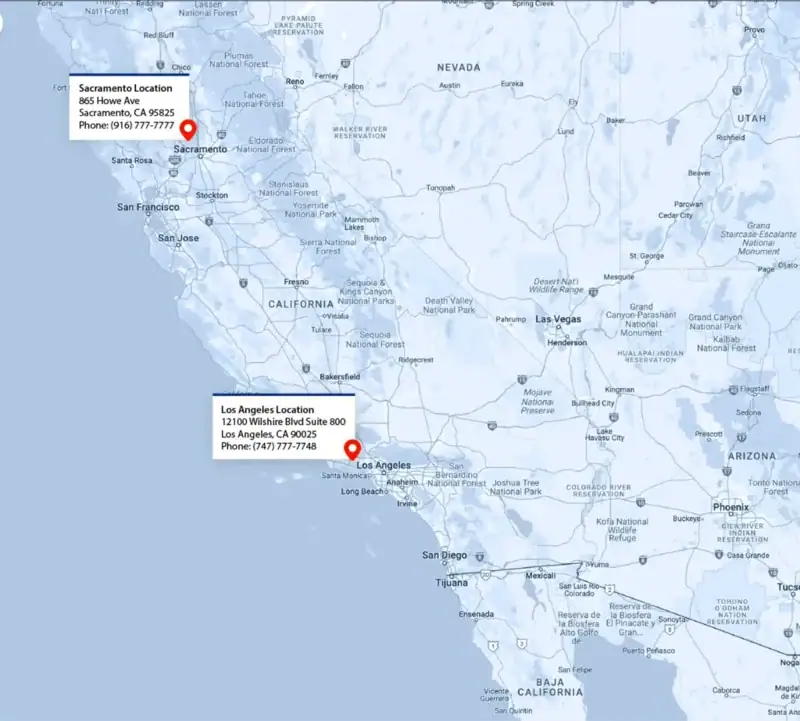
Arnold Law Firm represents Sacramento-area employees in employment cases throughout the region, including downtown Sacramento, Midtown, Natomas, North Sacramento, South Sacramento, Rancho Cordova, and Elk Grove, as well as surrounding cities including Roseville, Rocklin, Folsom, Citrus Heights, West Sacramento, and Davis. Employment law violations occur across every industry and at every level of seniority. We have represented professionals, technicians, hospitality workers, healthcare workers, retail workers, manufacturing workers, and others throughout the Sacramento Valley.
Sacramento Employment Practice Areas
Our plaintiff-side employment practice covers the full range of California employment law. Our principal subpages are:
Many cases involve more than one of these practice areas. We evaluate all available claims together at intake.
Contact Our Sacramento Employment Lawyers Today
If you believe you have experienced workplace discrimination, harassment, retaliation, wrongful termination, wage theft, or another California employment law violation, time matters. The administrative deadlines, statutes of limitations, and case-building investigation that determines settlement value all run on schedules that do not wait for the worker to decide. Call Arnold Law Firm at (916) 777-7777 for a free, no-obligation case evaluation. We will review the facts, explain your options in plain language, and tell you honestly whether we believe we can help.
We work on a contingency fee basis. You pay nothing unless we recover compensation for you.