Frequently Asked Questions About Sacramento Wage and Hour Cases
My employer says I am exempt from overtime because I am salaried. Is that correct?
Probably not, but it depends on more than the salary. California’s overtime exemptions require both a salary basis and a duties test. The salary basis currently requires payment of at least twice the state minimum wage for full-time employment. The duties test varies by exemption (executive, administrative, professional, outside sales, and others), and is the part most employers fail. A “manager” who spends most of the workday performing the same work as the people reporting to them is non-exempt regardless of title. A “professional” without genuinely discretionary judgment is non-exempt. We evaluate exempt classification by looking at what the worker actually does, not what the employer calls them.
My boss has me work through lunch. Can I sue?
Often, yes. Under Brinker Restaurant Corp. v. Superior Court, 53 Cal.4th 1004 (2012), the employer must provide an uninterrupted, duty-free 30-minute meal period for shifts over 5 hours. The employer is not required to police the break, but if the employer knows or should have known you worked through it, the employer owes either straight pay for the time worked or premium pay for the missed break under Labor Code § 226.7. The fact pattern matters: are you discouraged from taking the break? Are you required to remain on call during the break? Are you interrupted by work tasks? Each of these scenarios may support a premium pay claim.
I was paid as a 1099 independent contractor, but I think I should have been an employee. What can I do?
This is one of the most common wage and hour issues we evaluate. California’s ABC test under Labor Code § 2775 makes employee status the default. The employer must prove all three prongs: control, work outside the usual course of the business, and independent business engagement. The “B” prong (work outside the usual course) is the prong most often fatal to the employer’s classification. Drivers for a delivery company, cooks at a restaurant, technicians for a service company, and similar workers performing core services are almost never properly classified as independent contractors. If you should have been an employee, you may be owed back wages, overtime, missed-break premiums, expense reimbursement, and additional penalties tied to the same violations for the entire period of misclassification.
How far back can I claim unpaid wages?
Most California Labor Code wage claims have a 3-year statute of limitations under Code of Civil Procedure § 338. Derivative claims under California’s Unfair Competition Law (Business and Professions Code § 17200) can reach back 4 years. PAGA penalties have a 1-year notice period from the date of the violation. Common-law breach-of-contract claims for wages can sometimes reach back 4 years under Code of Civil Procedure § 337. We typically assemble the case to capture the longest applicable period.
I quit my job and my employer is taking weeks to pay my final wages. Is that legal?
No. California’s prompt-payment rules require payment of all earned wages immediately on termination if the employer discharges you, within 72 hours if you resigned without notice, or at the time of resignation if you gave at least 72 hours’ notice. Labor Code §§ 201, 202. Willful failure to pay triggers waiting time penalties under § 203, continuing at your daily rate for up to 30 days. The employer’s “we needed time to process payroll” excuse rarely satisfies the willful standard if the failure persists.
What is PAGA, and why does it matter for my case?
PAGA, the Private Attorneys General Act, allows an “aggrieved employee” with a Labor Code violation to seek civil penalties on behalf of themselves, other current and former employees, and the State of California. The penalties can be substantial (currently default at $100 per employee per pay period for an initial violation), and the threat of PAGA exposure often changes how employers approach settlement. Following the 2024 reform legislation (AB 2288 and SB 92), 35 percent of recovered penalties go to the aggrieved employees and 65 percent to the State. Most viable wage and hour cases benefit from being pleaded with PAGA where the prerequisites are satisfied.
My employer required me to use my personal cell phone for work but never reimbursed me. Is that legal?
No. Labor Code § 2802 requires employers to indemnify employees for all necessary expenses incurred in the course of work. Personal cell phones used for work, home internet for remote work, mileage for personal vehicle use on the job, and required tools or equipment all fall within § 2802. The employer cannot escape the obligation by characterizing the expense as voluntary. Cochran v. Schwan’s Home Service, Inc., 228 Cal.App.4th 1137 (2014), confirmed that the employer must reimburse a reasonable percentage of the employee’s cell phone bill when the phone is required for work.
Will my employer retaliate against me if I file a wage claim?
Retaliation against an employee for asserting wage and hour rights is illegal under California law, including Labor Code § 98.6 (rights protected by the Labor Commissioner) and § 1102.5 (whistleblower retaliation for reporting violations of law). A retaliation claim is a separate and powerful cause of action that often becomes the largest single piece of recovery in a wage and hour case. If you experience adverse action after asserting wage rights, document the timeline carefully and contact us immediately. Learn more about Sacramento workplace retaliation cases.
Can my employer make me sign away my wage rights?
No. California wage and hour protections are not waivable. An agreement that purports to waive minimum wage, overtime, meal and rest breaks, or other Labor Code protections is unenforceable as a matter of public policy, even if you signed it. Lab. Code § 219. The employer’s reliance on a signed waiver, release, or “independent contractor agreement” is not a defense to the underlying obligations.
How much does it cost to hire Arnold Law Firm for a wage and hour case?
Nothing up front. We handle wage and hour cases on a contingency fee basis. We collect a fee only if we recover compensation for you. Multiple statutes provide for fee-shifting against the employer when the employee prevails, so a large portion of attorney’s fees are typically paid by the employer, not out of your recovery. Your initial case evaluation is free.
Sacramento Areas We Serve
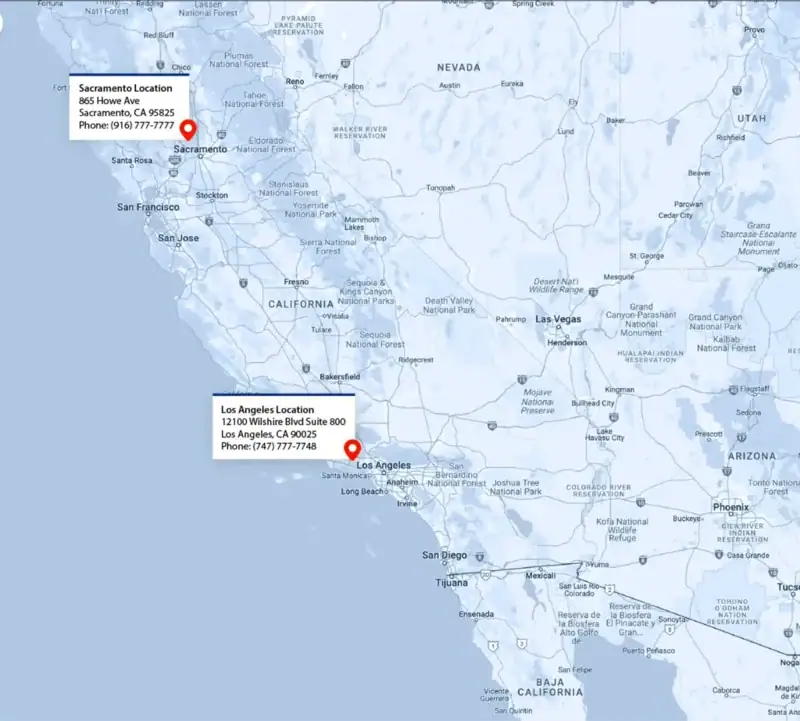
Arnold Law Firm represents Sacramento-area employees in wage and hour cases throughout the region, including downtown Sacramento, Midtown, Natomas, North Sacramento, South Sacramento, Rancho Cordova, and Elk Grove, as well as surrounding cities including Roseville, Rocklin, Folsom, Citrus Heights, West Sacramento, and Davis. Wage and hour violations occur across every industry, including hospitality and food service, healthcare, warehousing and logistics, construction, retail, and professional services. Sacramento County’s diverse employment base means that California’s wage and hour protections apply across an enormous range of workplace settings.
Related Sacramento Employment Practice Areas
Arnold Law Firm’s plaintiff-side employment practice handles cases across the FEHA discrimination and harassment framework as well as wage and hour. If your case involves more than one category, we evaluate all available claims together. Sacramento Employment Lawyer (overview). Sacramento Workplace Discrimination, Harassment, and Retaliation Lawyer.
Contact Our Sacramento Wage and Hour Attorneys Today
If you believe your employer has failed to pay overtime, denied meal or rest breaks, misclassified you as an exempt employee or as an independent contractor, withheld your final paycheck, or violated California’s other wage and hour protections, time matters. The statute of limitations is running, and the case-building work (gathering pay stubs, time records, employment agreements, communications about hours and duties) is best done before the trail goes cold. Call Arnold Law Firm at (916) 777-7777 for a free, no-obligation case evaluation. We will review the facts, explain your options in plain language, and tell you honestly whether we believe we can help.
We work on a contingency fee basis. You pay nothing unless we recover compensation for you.