Frequently Asked Questions About Sacramento FEHA Cases
What is the difference between discrimination and harassment under FEHA?
Discrimination is adverse employment action (firing, demotion, denial of promotion, pay disparity) because of a protected category. Harassment is conduct that creates a hostile, offensive, oppressive, or intimidating work environment because of a protected category. The two often overlap in the same case, but the elements, employer liability rules, and personal liability rules differ. Discrimination claims target the employer; harassment claims can also target the individual harasser personally under Government Code §12940(j)(3).
I was the only person at my company who is [in protected category]. Does that mean I have a case?
Maybe. Being a member of a protected category is necessary but not sufficient for a FEHA discrimination claim. You also need to show an adverse employment action and that the protected category was a substantial motivating factor in the action. The evidence can be direct (someone said something) or circumstantial (a pattern of treatment, suspicious timing, departures from policy). We evaluate based on the totality of the evidence.
How severe does the harassment have to be to support a claim?
Under California law, a single incident of harassment can be enough if it has “unreasonably interfered with the plaintiff’s work performance or created an intimidating, hostile, or offensive working environment.” Government Code §12923(b). The California Supreme Court in Bailey v. San Francisco District Attorney’s Office, 16 Cal.5th 611 (2024), held that a single use of a racial epithet (in that case, one use of the N-word) can be sufficient. Repeated, less severe conduct can also be sufficient if the conduct is pervasive enough to alter the conditions of employment.
My manager harassed me, but the company has a policy against harassment. Does the policy protect them from liability?
Not entirely. California is a strict-liability state for harassment by a supervisor. State Department of Health Services v. Superior Court, 31 Cal.4th 1026 (2003). The employer is liable for the harassment regardless of the policy. The employer’s policy may be relevant under the “avoidable consequences” doctrine, which can reduce damages where the employee unreasonably failed to use the policy. But the doctrine does not eliminate liability; it only affects the amount the employer pays.
I reported discrimination, and then I was fired. Is that retaliation?
Possibly, depending on the facts. Under Government Code §12940(h), an employer cannot take adverse action against an employee because the employee opposed FEHA-prohibited conduct or filed a complaint. The protection extends to employees who reasonably and in good faith believe the conduct violates FEHA, even if the underlying conduct is ultimately found lawful. Yanowitz v. L’Oreal USA, Inc., 36 Cal.4th 1028 (2005). Temporal proximity between the complaint and the adverse action (days or weeks rather than months or years) is strong circumstantial evidence of causation.
How long do I have to file a FEHA lawsuit?
Two deadlines apply, and missing either is typically fatal to the FEHA statutory claims:
- Three years from the date of the unlawful practice to file an administrative complaint with the California Civil Rights Department under Government Code §12960.
- One year from the date of the right-to-sue notice to file the civil action under Government Code §12965.
Common-law claims like wrongful termination in violation of public policy have separate statutes of limitations (typically two years under CCP §335.1) and do not require administrative exhaustion. Rojo v. Kliger, 51 Cal.3d 65 (1990).
Can I sue my supervisor personally?
For harassment claims, yes. Government Code §12940(j)(3) imposes personal liability on supervisors and coworkers who perpetrate harassment, regardless of whether the employer knew or should have known. For discrimination claims, no. Reno v. Baird, 18 Cal.4th 640 (1998), held that FEHA does not impose individual liability for personnel-management decisions that are later found discriminatory. The supervisor’s individual liability for harassment is one of the most strategically significant features of California employment law.
What if the harasser was a customer, not an employee?
The employer may still be liable. Government Code §12940(j)(1) provides that the employer can be liable for harassment by non-employees (customers, vendors, contractors) where the employer or its supervisors knew or should have known of the conduct and failed to take immediate and appropriate corrective action. M.F. v. Pacific Pearl Hotel Management LLC, 16 Cal.App.5th 693 (2017). The case law recognizes that an employer cannot escape responsibility for known abusive third-party conduct simply because the third party has not previously abused the specific employee.
What if I worked for a small employer with only a few employees?
FEHA harassment provisions apply at a much lower employer-size threshold than discrimination provisions. The general discrimination threshold is 5 or more employees under Government Code §12926(d). For harassment claims, Government Code §12940(j)(4)(A) defines “employer” as any person regularly employing one or more persons or receiving the services of one or more contract workers. A worker at a small employer who would not have a discrimination claim may still have a harassment claim under FEHA, and a retaliation claim may also be available depending on the protected activity. The same one-or-more rule means harassment claims often reach the smallest employers that discrimination law cannot.
What damages can I recover?
FEHA permits recovery of back pay, front pay, lost benefits, emotional distress damages (not capped under California law), punitive damages where the conduct was malicious or oppressive, attorney’s fees and costs, reinstatement where appropriate, and injunctive relief. Punitive damages are available against private employers but not against public employers, and against a corporate employer they generally require proof that an officer, director, or managing agent engaged in, authorized, or ratified the conduct. White v. Ultramar, Inc., 21 Cal.4th 563 (1999). The combination of uncapped non-economic damages, available punitives, and fee-shifting under Government Code §12965 often makes FEHA cases substantially more valuable than the headline back-pay number suggests.
How much does it cost to hire Arnold Law Firm for a FEHA case?
Nothing up front. We handle FEHA cases on a contingency fee basis. We collect a fee only if we recover compensation for you. Government Code §12965 permits the court to award reasonable attorney’s fees, costs, and expert-witness fees to a prevailing employee. That fee-shifting rule can substantially increase settlement value, but the handling of fees and the contingency fee are governed by the written fee agreement we sign with each client. Your initial case evaluation is free.
Sacramento Areas We Serve
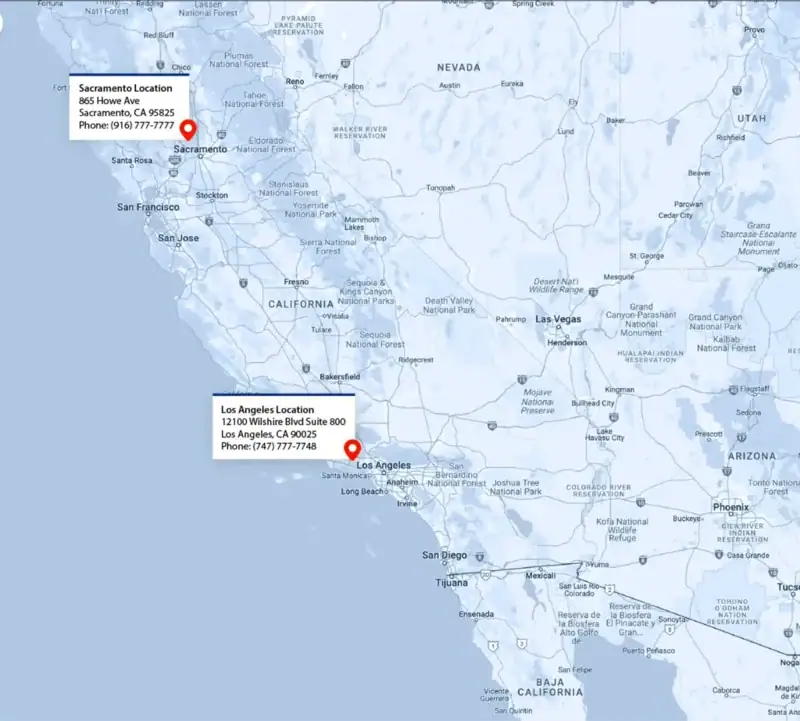
Arnold Law Firm represents Sacramento-area employees in FEHA discrimination, harassment, and retaliation cases throughout the region, including downtown Sacramento, Midtown, Natomas, North Sacramento, South Sacramento, Rancho Cordova, and Elk Grove, as well as surrounding cities including Roseville, Rocklin, Folsom, Citrus Heights, West Sacramento, and Davis. FEHA cases arise across every industry and at every level of seniority. We have represented professionals, technicians, hospitality workers, healthcare workers, retail workers, manufacturing workers, and others throughout the Sacramento Valley.
Related Sacramento Employment Practice Areas
Our plaintiff-side employment practice handles cases beyond the FEHA cluster. If your case involves more than one category, we evaluate all available claims together. Sacramento Employment Lawyer (overview). Sacramento Wage and Hour Attorney.
Contact Our Sacramento FEHA Lawyers Today
If you have experienced workplace discrimination, harassment, or retaliation, time matters. The three-year administrative deadline and the one-year post-right-to-sue deadline are running. The case-building investigation that determines settlement value is best done before memories fade, witnesses scatter, and documents are lost. Call Arnold Law Firm at (916) 777-7777 for a free, no-obligation case evaluation. We will review the facts, explain your options in plain language, and tell you honestly whether we believe we can help.
We work on a contingency fee basis. You pay nothing unless we recover compensation for you.