
Tag: sur la table

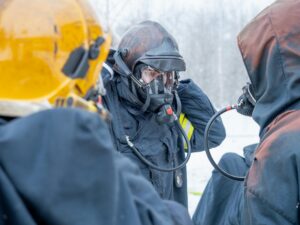
Industrial chemical storage tank with emergency response equipment, illustrating the Garden Grove methyl methacrylate leak incident

Garden Grove Methyl Methacrylate Leak at GKN Aerospace: Legal Rights for Evacuated Residents

May 24, 2026 UPDATE: Significant developments since this article was first published See “Major Developments Since the Leak Began” below for details. More than 50,000 Orange County residents have been ordered out of their homes since Thursday afternoon after a 34,000-gallon storage tank at the GKN Aerospace facility in Garden Grove began leaking methyl methacrylate, a highly flammable, toxic industrial chemical. Orange County Fire Authority officials have publicly warned that the compromised tank is expected to fail and may explode. If you live, work, attend school, or own a business inside the evacuation zone, you may be entitled to compensation for the costs and harms you have already incurred, and for those still to come. This page explains, in plain

Treble Damages in California Trucking Cases

California law provides a specific statutory remedy for victims injured by impaired commercial vehicle drivers when their employers fail to meet federal safety requirements. Understanding when treble damages apply—and how they differ from standard punitive damages—is crucial for truck accident victims seeking maximum compensation. What Are Treble Damages? Treble damages allow injured parties to recover three times their actual damages under specific legal circumstances. In California trucking cases, this remedy is narrowly defined and differs significantly from general punitive damages available in other personal injury cases. California Civil Code § 3333.7: Statutory Treble Damages Requirements for Recovery Under California Civil Code § 3333.7, injured parties may recover treble damages from a commercial motor vehicle driver’s employer when all of the

California Trucking Accidents: Standards of Care

California law establishes different standards of care for trucking operations depending on the type of service provided. While most commercial trucking companies transporting freight are subject to ordinary negligence standards, federal motor carrier safety regulations impose enhanced duties that can significantly affect liability in truck accident cases. Key Takeaways: Commercial carriers of goods generally DO NOT have the duty of “utmost care” Federal Motor Carrier Safety Regulations (FMCSRs) DO create heightened standards in specific situations Large truck drivers must exercise greater caution than ordinary motorists Licensed motor carriers have nondelegable safety duties Common Carrier Standard: When Does “Utmost Care” Apply? The Enhanced Duty for Passenger Transportation California Civil Code section 2100 requires carriers of persons for reward to use “the

Punitive Damages in California Personal Injury Cases

What Are Punitive Damages? Punitive damages are extra money a court can order a wrongdoer to pay, on top of the money that compensates an injured person for medical bills, lost wages, and pain and suffering. The main goal of punitive damages is not to repay the victim, but to punish especially bad behavior and to discourage similar conduct in the future. Think of punitive damages as a financial penalty for conduct that is much worse than ordinary carelessness. In California, punitive damages are not common. They are reserved for cases where the defendant’s conduct is particularly harmful, intentional, or shows a conscious disregard for the safety or rights of others. Most personal injury cases involve simple negligence (for example,

Settlement - $3,767,000

Truck Accident

A 20-year-old man who had been married for just 12 days left home on his way to work. He was driving on Pleasant Grove Road in Sutter County in the early morning when he came upon a slow-moving truck. As he pulled out to pass the truck, the truck driver turned left in front of him. The young man attempted to steer back into his lane but his vehicle struck an un-flagged piece of metal extending from the back of the truck. He died in the resulting crash.

Expert witnesses brought in by the Arnold Law Firm proved that the truck, owned and operated by a hauling firm, should never have been on the highway that morning. Specifically, the rear and side turn signals did not work and the rear-view mirror was in a poor state of adjustment at the time of the collision. As a result, the driver, who had failed to properly inspect the vehicle before setting out that morning, couldn’t see the young man’s vehicle as it attempted to pass.

The poor condition of the truck, its lack of maintenance and the manner in which it was operated were found to be substantial factors in causing the collision that killed the young man. The testimony also established that the man had been making a lawful pass at the lawful speed limit and acted reasonably when he attempted to avoid the collision.

The man’s 20-year-old widow was awarded $3,767,000.77, his parents were awarded $185,131 and the family was reimbursed $11,899 in funeral expenses. Though money is a poor substitute for a young man’s life, this verdict demonstrates that drivers who endanger the lives of others will be held accountable for their actions.