Frequently Asked Questions About Sacramento Hit-and-Run Cases
The driver fled the scene. Can I still recover compensation?
Yes, in most cases. Your own uninsured motorist (UM) coverage under Insurance Code §11580.2 provides bodily injury coverage when the at-fault driver was uninsured or fled and was not identified. The coverage applies even though the at-fault driver was not your own driver, because California requires the unidentified driver to be treated as uninsured for purposes of your policy. You will need to report the crash to police within 24 hours and provide a sworn statement to your insurer within 30 days.
What is the “physical contact” requirement, and does my case satisfy it?
For UM bodily injury coverage in a hit-and-run case, California law requires actual physical contact between you (or the vehicle you were in) and the unidentified vehicle. The case law construes this beyond simple direct contact. Contact by an object falling from or carried by the phantom vehicle satisfies the requirement. Pham v. Allstate Insurance Co., 206 Cal.App.3d 1193 (1988). So does a chain collision where the phantom vehicle hits another vehicle which then hits you. Inter-Insurance Exchange v. Lopez, 238 Cal.App.2d 441 (1965). Pure phantom-vehicle scenarios where the unidentified vehicle caused the crash without any contact (forced you to swerve and crash) generally do not. Boyd v. Interinsurance Exchange, 136 Cal.App.3d 761 (1982).
What if the driver is identified later?
The case then proceeds as a standard motor vehicle injury case against the driver and their liability insurer, with two important additions. First, the driver’s hit-and-run conduct supports a separate negligence-per-se claim under Brooks v. E.J. Willig Truck Transp. Co., 40 Cal.2d 669 (1953). Second, the driver’s credibility before a jury is significantly compromised, which strengthens settlement leverage and trial value.
Can I recover punitive damages from a driver who fled?
Possibly, depending on the circumstances. California’s Civil Code §3294 requires malice, oppression, or fraud proven by clear and convincing evidence. The standard is high. No published California decision specifically holds that fleeing alone supports punitives, but punitive damages are available where fleeing was combined with other aggravating factors such as drunk driving (Taylor v. Superior Court, 24 Cal.3d 890 (1979)), prior similar offenses, intentional misconduct, or extreme recklessness.
What is the deadline to file a hit-and-run case?
Multiple deadlines apply. For your own UM hit-and-run claim: a police report within 24 hours of the crash, and a sworn statement to your insurer within 30 days. For a civil suit against the driver (if identified): the standard two-year personal injury statute of limitations under Cal. Civ. Proc. Code §335.1, measured from the date of the crash. For a wrongful death case arising from a fatal hit-and-run: two years from the date of death. Norgart v. Upjohn Co., 21 Cal.4th 383 (1999).
The at-fault driver was eventually arrested for DUI. Does that affect my civil case?
Yes, in your favor. A driver who fled and was later identified as intoxicated faces civil liability on multiple grounds. The intoxication alone supports punitive damages under Taylor v. Superior Court. The flight adds a negligence-per-se claim and additional credibility damage. The criminal DUI charge produces evidence (BAC results, arrest reports, eventual conviction) that may be admissible in the civil case.
My own insurance company is denying my UM claim. What can I do?
Insurance company denials of UM hit-and-run claims often involve the physical contact requirement (claiming there was no contact when the case actually fits within Pham or Lopez) or the reporting deadlines (claiming late notice). The denial is not the end of the matter. A bad-faith insurance practice claim may also be available where the insurer denied a meritorious claim without reasonable basis. Don’t accept a UM denial without an attorney evaluating the specific facts.
I was hit as a pedestrian, not in a vehicle. Does UM coverage apply?
UM coverage may apply even if you were walking, not driving, so long as you qualify as an insured under the policy and the unidentified vehicle physically contacted you. Insurance Code §11580.2 defines “insured” to include the named insured, the named insured’s spouse, and resident relatives whether they are occupying a vehicle or not. The 24-hour police report and 30-day sworn statement deadlines still apply.
Will my own insurance company raise my rates if I make a UM claim?
A properly handled not-at-fault UM claim should not be treated as a principally at-fault accident. California rating rules generally require the insurer to determine that you were at least 51 percent legally responsible before treating an accident as principally at fault, and hit-and-run contact reported to law enforcement is generally presumed not to be your fault. Your premium can still change for unrelated reasons, so if your insurer says the claim will affect your rates, ask for the fault and rating decision in writing.
How much does it cost to hire Arnold Law Firm?
Nothing up front. We handle hit-and-run cases on a contingency fee basis. We collect a fee only if we recover compensation for you. Your initial case evaluation is free.
California Victim Compensation Board Benefits
In some serious hit-and-run cases, the California Victim Compensation Board may provide limited help with crime-related expenses when no other source is available. CalVCB is not a substitute for uninsured motorist coverage or a civil claim, and it is generally a payor of last resort, but it may help with expenses such as medical care, mental-health treatment, funeral costs, or income loss in eligible cases. Eligibility depends on prompt reporting to law enforcement and cooperation with the investigation, so the same 24-hour reporting that protects your UM claim also preserves CalVCB eligibility.
Sacramento Areas We Serve
Sacramento is not just a generic hit-and-run market. In the California Office of Traffic Safety’s 2023 rankings, Sacramento recorded 581 fatal-and-injury hit-and-run collisions, ranking 3rd of 15 comparable California cities in its population group for that category. The combination of dense urban corridors, freeway off-ramps, and active nightlife produces fact patterns that recur across our cases.
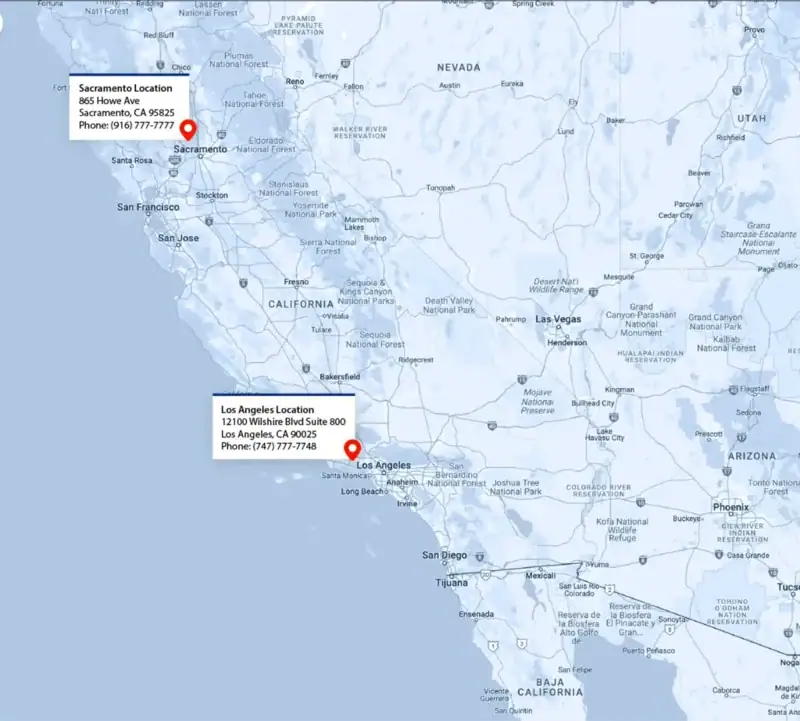
Arnold Law Firm represents hit-and-run victims throughout the Sacramento region, including downtown Sacramento, Midtown, Natomas, North Sacramento, South Sacramento, Rancho Cordova, and Elk Grove, as well as surrounding cities including Roseville, Rocklin, Folsom, Citrus Heights, West Sacramento, and Davis. Hit-and-run crashes occur disproportionately in commercial corridors, near nightlife areas, and on freeway off-ramps. We are familiar with the local geography of these crashes and the patterns of evidence preservation that succeed in identifying fleeing drivers.
Contact Our Sacramento Hit-and-Run Lawyers Today
If you or a family member has been hit by a driver who fled the scene, time matters acutely. The 24-hour police report deadline starts at the moment of the crash. The 30-day sworn statement deadline runs from the same moment. Surveillance footage that might identify the driver is being overwritten as we speak. Call Arnold Law Firm at (916) 777-7777 for a free, no-obligation case evaluation. We will review the facts, explain your insurance recovery options in plain language, and tell you honestly whether we believe we can help.
We work on a contingency fee basis. You pay nothing unless we recover compensation for you.