
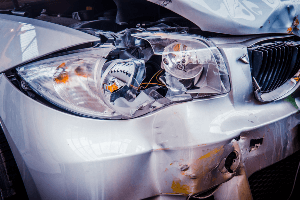
 Head-on collisions are often some of the most fatal types of accidents that can occur. Victims of head-on collisions who do survive may be left with serious or life-altering injuries. Victims and their loved ones are often left with significant medical bills and many other damages.
You have a legal right to pursue compensation for these medical expenses and other damages you suffer due to someone else’s negligent actions. Let our knowledgeable car crash lawyers in Sacramento help you through the process of filing a claim, with the goal of securing maximum compensation.
We offer a free consultation to discuss your legal options, and there are no upfront fees for our services.
Head-on collisions are often some of the most fatal types of accidents that can occur. Victims of head-on collisions who do survive may be left with serious or life-altering injuries. Victims and their loved ones are often left with significant medical bills and many other damages.
You have a legal right to pursue compensation for these medical expenses and other damages you suffer due to someone else’s negligent actions. Let our knowledgeable car crash lawyers in Sacramento help you through the process of filing a claim, with the goal of securing maximum compensation.
We offer a free consultation to discuss your legal options, and there are no upfront fees for our services.
Why Do Head-On Collisions Occur?
A head-on collision is a traffic crash where the front ends of two vehicles hit each other when traveling in opposite directions. While only about two percent of accidents are head-on collisions in the U.S., these types of crashes account for about 10 percent of all traffic fatalities, according to the National Highway Traffic Safety Administration. Since head-on crashes are more likely to happen on narrow or one-way roads, they are generally more common in rural areas. However, these types of crashes may also occur on narrow or one-way urban roads if a driver is driving in a negligent manner. Generally, head-on crashes are caused by the following:- Distracted driving
- Fatigued driving
- Improper passing on single-lane roads
- Driving under the influence of drugs or alcohol
- Failure to adhere to right-of-way traffic laws
How is Liability for a Head-On Collision Determined?
Liability for any crash comes down to which driver acted in a negligent manner and caused damages. Since head-on collisions require two vehicles traveling in opposite directions to collide, fault is usually determined by establishing which of the two drivers failed to stay on the right side of the roadway. The driver who was on the wrong side of the road was more than likely negligent. On a road with only two lanes that travel in opposite directions with no median to divide them, a negligent driver can easily drift into the other lane and collide with an oncoming vehicle. For cases involving improper passing on a two-way highway, fault is likely to be assigned to the driver who did not properly check for oncoming traffic or chose to pass over double yellow lines. Fault may also fall on a driver who ignored traffic signs indicating a one-way road. However, drivers often ignore these signs because they are intoxicated or distracted. If the at-fault driver in a head-on collision dies, which often happens, his or her estate may be liable for damages suffered by the other driver. If both drivers die, the family of the victim may be able to pursue a wrongful death claim against the estate of the at-fault driver. It is also important to consider a driver who was on the wrong side of the road may have taken evasive action to avoid a crash. He or she may still be partially at fault, but a third party may bear fault for the rear-end crash. Sometimes drivers’ cars are pushed into oncoming traffic because of another driver’s negligence. For example, sometimes a rear-end crash involving a driver waiting to turn left results in a head-on crash.What Evidence Can Help Prove Fault in a Head-On Collision?
Crash victims may need various pieces of evidence to prove their case, including:- Police report
- Witness testimony
- Expert witness testimony
- Dashcam footage
- Photos/videos from the scene
- Photos of damage to the vehicles
What Types of Injuries Are Common in a Head-On Collison?
Impact from a head-on collision can lead to serious or life-threatening injuries. Some of these injuries may even stay with you for the rest of your life:- Brain injuries
- Spinal cord injuries
- Head injuries
- Broken bones
- Bruises and cuts
- Internal bleeding
- Organ damage
- Herniated discs
- Whiplash
- Strains and sprains
Schedule a Free Consultation. Call Today
We offer a free consultation to discuss your claim with one of our licensed attorneys. If you decide you want to work with us, there are no upfront fees for our services. We also do not charge you anything unless we successfully recover compensation on your behalf. There is no risk to you.Call 916-777-7777 to learn more.