
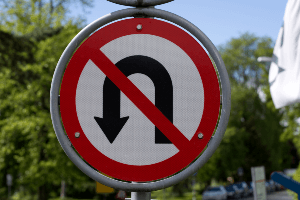
 A U-turn is one of the most dangerous maneuvers one can make in traffic. When making a U-turn, drivers must ensure the road is clear. Heavy traffic and miscalculation can result in a serious accident.
Determining who is liable for a U-turn crash may be complicated since there are several factors to consider. Our Sacramento-area car crash attorneys are prepared to review your claim during a free consultation. We can discuss the legal options that may be available to you.
There are no fees while we work on your case. You only pay us if we successfully recover compensation for you.
A U-turn is one of the most dangerous maneuvers one can make in traffic. When making a U-turn, drivers must ensure the road is clear. Heavy traffic and miscalculation can result in a serious accident.
Determining who is liable for a U-turn crash may be complicated since there are several factors to consider. Our Sacramento-area car crash attorneys are prepared to review your claim during a free consultation. We can discuss the legal options that may be available to you.
There are no fees while we work on your case. You only pay us if we successfully recover compensation for you.
California U-Turn Laws
Not all U-turns in California are treated the same. The state has specific rules that change depending on where you’re driving and what the road looks like when you try to turn around. What’s allowed in a quiet neighborhood might get you a ticket on a busy commercial street—or worse, on a highway. That’s why the California Vehicle Code breaks U-turn laws into different sections. Each one applies to a different setting, and the details matter. Up ahead, we’ll get into how these rules apply at intersections, in business districts, residential areas, and along highways.U-Turns at Intersections – CVC 22100.5
Making a U-turn at a traffic light in California is legal under the right conditions, but a green light doesn’t automatically mean you’re good to go. According to CVC 22100.5, drivers must be in the far-left lane to make the turn, and even then, it’s only allowed if there’s no posted sign saying otherwise. If a “No U-turn” sign is present, it overrides the signal—plain and simple. Visibility is another key factor. If you can’t clearly see whether the road is clear in both directions, you’re not legally in the clear to turn. You also have to yield to oncoming cars and pedestrians already in the intersection. Ignoring any of these conditions can lead to a citation, with fines that often go over $200 and one point added to your DMV record. Intersections are busy for a reason—don’t assume the rules bend just because the light turns green.U-Turns in Business Districts – CVC 22102
In California, making a U-turn in a business district comes with stricter limitations. Under CVC 22102, drivers are not allowed to make a U-turn mid-block in these areas. The only legal exceptions are at intersections or clearly marked openings designed for that purpose. A “business district,” legally speaking, refers to any area where at least half the buildings along a stretch of road are used for commerce—think retail shops, gas stations, restaurants, and offices. Streets like Ventura Boulevard in Los Angeles or El Camino Real in the Bay Area are typical examples. These areas tend to have heavy vehicle and foot traffic, frequent driveway exits, and reduced visibility due to parked cars or delivery trucks, which is exactly why mid-block U-turns are considered unsafe. Making one in the wrong spot isn’t just illegal—it puts you at risk of cutting off other drivers or causing confusion in an already congested environment. Following the rule here isn’t just about avoiding a fine—it’s about keeping the flow of traffic predictable and safe.U-Turns in Residential Areas – CVC 22103
In residential neighborhoods, U-turns are usually allowed—but only if specific safety conditions are met. CVC 22103 requires that a driver have at least 200 feet of clear visibility in both directions before attempting the turn. That means if you’re on a narrow street, approaching a hill or curve, or anywhere visibility is blocked, the maneuver becomes illegal. Another common mistake is making a U-turn from the wrong lane. Just like at intersections, it has to be done from the far-left lane unless otherwise marked. Drivers often forget this near schools or parks, where traffic signs and road markings may vary. And even in areas where U-turns are generally allowed, signage still takes priority. If a “No U-turn” sign is posted, the rule doesn’t apply—it’s the sign that controls the situation. People often assume residential streets are more forgiving, but ignoring these details can still result in a citation and put others at unnecessary risk.U-Turns on Highways – CVC 22105
Highways are among the most dangerous places to attempt a U-turn, which is why CVC 22105 lays out strict conditions for when, if ever, it’s allowed. A driver can only make a U-turn on a highway if there is at least 200 feet of clear visibility in both directions. That’s because vehicles on highways are moving fast, and the margin for error is extremely slim. Even a small misjudgment in speed or distance can lead to a serious collision. In many cases, curves, hills, or elevation changes make it hard to accurately see approaching traffic, and attempting a U-turn in those conditions is not only reckless—it’s illegal. If a crash occurs because a driver made an unsafe U-turn, they’ll likely be held liable for damages and may face legal consequences beyond a traffic citation. Unless there’s a clearly marked, designated spot for turning around, it’s safest—and legally smartest—to keep driving until one appears. Taking the risk simply isn’t worth it.Are U-Turns Always Legal in California?
The California vehicle code has various restrictions on U-turns. Generally, a U-turn can be legally made:- In a residential area only if there are no other vehicles within 200 feet
- When traffic lights or signs control any approaching traffic in a residential area
- At an intersection that has a green light or arrow to control traffic flow, unless otherwise prohibited
- On highways where there is an opening provided for U-turns in the center divider
- Railroad crossing
- Divided highway if there is a curb, strip of turf, or two sets of double yellow lines
- One-way street
Who Had the Right-of-Way?
When determining liability for a U-turn crash, establishing who had the right-of-way is important. Drivers attempting a U-turn are legally obligated to yield the right of way to:- Oncoming traffic
- Pedestrians in the crosswalk
- Cyclists in the bike lane
- Right-turning vehicles
U-Turn Accidents Involving Pedestrians
If a pedestrian is attempting to cross when he or she has a “do not walk” sign, liability may fall on that person. While the U-turning driver is expected to react in a manner that would prevent a collision, he or she may not have enough time. If the pedestrian’s negligent actions are proven to be the main cause of the collision, he or she could be fully liable. One example of this is if the pedestrian ran across the street without paying attention to traffic or if he or she was texting and walking.U-Turn Accidents Involving Cyclists
Traffic laws for cyclists are often not followed as closely as they should be. This means that some cyclists often ride through traffic lights when they should stop with the rest of traffic. If a driver attempting a U-turn on a green arrow collides with someone on a bicycle, the cyclist may be liable for damages because he or she should have stopped at the red light.Rear-End Collisions While Attempting a U-Turn
Drivers attempting a U-turn often must wait for a larger gap in traffic because once they successfully manage the maneuver, they will be in the same lane as oncoming vehicles. This often makes drivers waiting behind them impatient. Especially if the driver is attempting the U-turn during peak hours when traffic is heavier. An impatient driver may get too close and hit the accelerator before the U-turning vehicle is out of the way. If the rear driver crashes into the back of the U-turning vehicle, he or she could be liable for damages.U-Turn Accidents Involving Drivers Who Break Traffic Laws
A collision between a U-turning driver and a driver that ran a red light, was speeding or broke some other traffic law is another possible scenario. In this case the driver who broke the law would be liable for damages that occur.Penalties for Making an Illegal U-Turn in California
Making an illegal U-turn in California carries more than just a slap on the wrist. The base fine for the violation is typically around $234, though this amount can increase once court fees and administrative costs are added. In addition to the financial hit, a conviction usually results in one point being added to your DMV record, which stays there for several years.Points, Insurance, and License Risk
One point might not seem like much, but accumulating points over time can lead to a “negligent operator” designation. If that happens, the California DMV can suspend or revoke your license. Beyond that, even a single traffic violation can cause insurance premiums to spike, especially if the driver has prior infractions on record. Insurers view moving violations—especially dangerous ones like illegal U-turns—as an indicator of risky behavior.Impact on Liability and Injury Claims
In the context of a crash, liability becomes much more serious. If a driver makes an illegal U-turn in front of a motorcycle, for example, they may be found entirely at fault for any resulting injuries. In these situations, U-turn motorcycle crash liability is often clear-cut, and the consequences can involve not just tickets, but lawsuits. Consulting a California car accident attorney becomes critical, especially when personal injury claims or large medical bills are involved.What Are Your Legal Options if You Were Hit by a Driver Making a U-Turn?
If you were injured in a crash caused by someone making an illegal U-turn, you may have grounds for an illegal U-turn injury claim. The steps you take immediately after the incident can make a significant difference in protecting your rights and building a strong case. To pursue compensation, consider the following actions:- Gather clear evidence from the scene. Dash cam footage, photos of the intersection, and statements from any witnesses can all help establish fault.
- File a police report, even if injuries seem minor at first. This report creates an official record of the event, which can support your claim later.
- Seek medical attention promptly and document all treatments, diagnoses, and expenses.
- File a personal injury claim through the at-fault driver’s insurance or consult with an attorney for further legal action.
- Speak with a California car accident attorney who understands traffic laws and how to handle U-turn-related crashes.
- Arnold Law Firm Accident & Injury Attorneys offers free consultations, so it costs nothing to have your case reviewed and find out whether you’re entitled to compensation.
U-Turn Exceptions and Legal Defenses in California
Although California U-turn laws are clearly defined in the Vehicle Code, there are scenarios where a citation may be challenged or even dismissed. Depending on the details of the incident, drivers have the right to present a legal defense if they believe the U-turn was justified or the citation was issued in error.Obscured or Missing Signage
One common defense involves unclear or obscured signs. If a “No U-turn” sign was hidden by vegetation, poorly placed, or missing entirely, the driver may not have been reasonably informed that the maneuver was prohibited. This can provide a strong basis for contesting the citation.Incomplete Maneuver or Shared Fault
Another argument arises when the U-turn was not actually completed. For example, if a driver began turning but stopped due to traffic conditions and did not cross fully into the opposite lane, intent may not be enough for a violation. Additionally, if another driver was also acting negligently, liability could be shared.Legal U-Turn Locations
It’s also worth noting that U-turns in residential districts are legal under certain conditions, such as when there’s clear visibility for 200 feet. Understanding the exact wording of California U-turn laws can help drivers assert valid defenses in these cases.How Does an Illegal U-Turn Impact a Personal Injury Lawsuit?
Understanding how traffic violations influence personal injury cases is essential—especially when U-turns are involved. Under California U-turn laws, certain maneuvers are allowed, but if performed in restricted zones or without meeting visibility requirements, they become unlawful. When a U-turn is made illegally and causes a crash, that action may directly shape the outcome of a personal injury claim.- Negligence Per Se Applies: California recognizes the concept of “negligence per se,” meaning that if a driver violates a traffic law designed to protect public safety—like U-turn restrictions—that violation may be considered automatic negligence in court. This standard can streamline the process of proving fault.
- Traffic Violations Strengthen Fault Claims: When investigating who caused the crash, attorneys and insurance companies often ask: Are U-turns illegal in this context? If the answer is yes, it becomes much easier to hold the at-fault party responsible.
- Comparative Fault Still Matters: Even when one driver is clearly negligent, California’s comparative fault system means that both parties can be assigned a percentage of responsibility. An injured party’s compensation may be reduced if they’re found partially at fault.
- Legal Guidance Builds a Stronger Case: Working with a knowledgeable attorney helps ensure no detail is overlooked. From obtaining traffic camera footage to interpreting California U-turn laws, legal professionals know how to build a compelling argument that connects the violation to the resulting harm.
Why You Need a Lawyer After a U-Turn Accident
U-turn accidents often lead to complex legal and insurance issues, especially when fault isn’t immediately clear. Having a skilled attorney on your side can make the difference between a denied claim and full financial recovery.Navigating Insurance and Liability Disputes
When a driver makes an illegal U-turn in front of a motorcycle or another vehicle, the resulting crash can trigger disputes over who is responsible. Insurers may argue over visibility, signage, or right-of-way. A qualified attorney understands how to counter these claims with relevant law and evidence.Preserving Key Evidence
Critical details like crash scene photos, surveillance footage, or dash cam recordings can fade or disappear if not preserved promptly. A lawyer can help secure this material, along with police reports and witness statements, to strengthen your case.Handling Communication and Protecting Your Rights
From speaking with law enforcement to negotiating with insurers, an attorney ensures your statements aren’t misinterpreted or used against you. They’ll also make sure you don’t accept a low settlement offer.Maximizing Compensation with Arnold Law Firm Accident & Injury Attorneys
Whether you’re dealing with property damage, lost wages, or serious injuries, the Arnold Law Firm Accident & Injury Attorneys can help you recover the full amount you deserve. They also understand that U-turns in residential districts are legal in certain circumstances—so they know how to defend against unfair accusations.Contact Arnold Law Firm Accident & Injury Attorneys Today
If you were injured in a crash involving an illegal U-turn, it’s important to speak with a team that understands the full scope of California U-turn laws and how they impact personal injury cases. At Arnold Law Firm Accident & Injury Attorneys, we offer free consultations to help you understand your legal rights and next steps. You won’t owe any legal fees unless we win your case. Our compassionate and experienced legal team is ready to support you through every stage of your illegal U-turn injury claim, from gathering evidence to negotiating with insurance companies. Whether the other driver turned illegally in front of your vehicle or violated traffic rules on a residential street or intersection, we’re prepared to investigate thoroughly and protect your interests. If you were injured due to the negligent actions of another driver, our licensed attorneys are prepared to help. We offer a free legal consultation to discuss your claim. There are also no fees while we work on your case. If you have questions, you do not need to wait to seek help. The insurance company will already be working against you, so you need an experienced advocate on your side.Call 916-777-7777 to get started, or fill out our online contact form to connect with a trusted California car accident attorney. We’re here to help you move forward with clarity and confidence.